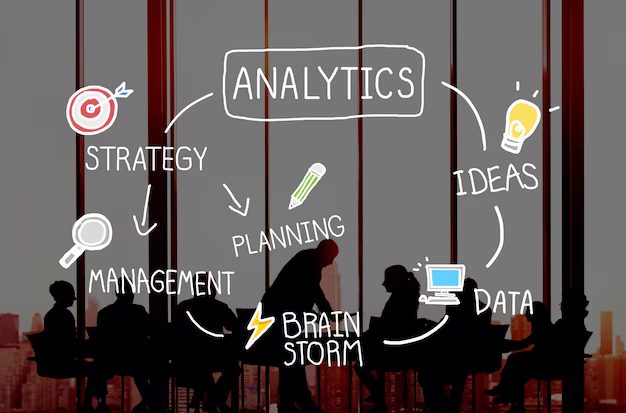
In today’s fast-moving digital economy, businesses are under constant pressure to improve efficiency, reduce costs, and deliver better customer experiences. Companies that once relied on paper-based processes, manual workflows, and traditional decision-making are now embracing advanced technologies to remain competitive. At the heart of this transformation is AI in business, a technology that is redefining how organizations operate across every industry.
Artificial intelligence is no longer a concept reserved for large enterprises or technology giants. Small businesses, startups, and established organizations are adopting AI to automate repetitive tasks, analyze data faster, improve customer service, and make smarter business decisions. As digital transformation accelerates worldwide, AI has become one of the most valuable tools for sustainable growth.
In this blog, we’ll explore how businesses are moving from traditional operations to digital ecosystems, the role of AI in this transformation, the benefits of AI adoption, practical use cases, challenges, and how companies can successfully implement AI for long-term success.
Understanding the Shift from Traditional to Digital Business

Traditional businesses typically rely on manual processes, physical documentation, spreadsheets, and human-driven decision-making. While these methods have served organizations for decades, they often create bottlenecks, increase operational costs, and slow response times.
Digital businesses, on the other hand, leverage cloud technology, automation, analytics, and AI-powered tools to streamline operations. Instead of reacting to problems, they use data-driven insights to anticipate trends, optimize workflows, and enhance customer experiences.
The transition to digital is not just about replacing paper with software. It involves rethinking business processes, improving collaboration, and adopting technologies that make organizations more agile and resilient.
Why AI Is Driving Digital Transformation

Artificial intelligence has become one of the most influential technologies behind digital transformation because it enables businesses to process large amounts of information quickly and accurately.
Unlike traditional software that follows fixed instructions, AI systems can learn from data, identify patterns, and improve over time. This allows organizations to automate complex processes and make informed decisions with greater confidence.
Some of the reasons AI is accelerating digital transformation include:
- Faster data analysis
- Improved operational efficiency
- Better customer engagement
- Reduced manual work
- Smarter forecasting
- Personalized customer experiences
- Enhanced cybersecurity
- Better resource allocation
These capabilities help businesses become more productive while creating better experiences for employees and customers alike.
Key Ways AI Is Changing Business Operations

1. Automating Repetitive Tasks
One of the biggest advantages of AI in business is automation.
Many organizations spend countless hours on repetitive activities such as entering data, processing invoices, scheduling appointments, generating reports, and responding to routine customer inquiries.
AI-powered automation reduces human effort while improving accuracy and speed.
Examples include:
- Invoice processing
- HR onboarding
- Payroll assistance
- Appointment scheduling
- Email categorization
- Inventory updates
Automation allows employees to focus on strategic work instead of repetitive administrative tasks.
2. Smarter Business Decisions Through Data

Businesses generate enormous amounts of data every day.
Without AI, much of this information remains unused.
AI analyzes historical and real-time data to identify patterns, forecast trends, and provide actionable insights.
Business leaders can use AI to:
- Predict customer demand
- Identify sales opportunities
- Reduce operational risks
- Improve budgeting
- Forecast revenue
- Optimize inventory
This leads to faster and more informed decision-making.
3. Enhancing Customer Service

Customer expectations have changed dramatically.
Modern consumers expect fast, personalized, and convenient service.
AI helps businesses deliver exceptional customer experiences through:
- Intelligent chatbots
- Virtual assistants
- Personalized recommendations
- Automated support tickets
- Customer sentiment analysis
These tools reduce response times while increasing customer satisfaction.
4. Improving Marketing Performance

Marketing has become increasingly data-driven.
AI helps marketing teams understand customer behavior and optimize campaigns.
Businesses use AI to:
- Analyze audience behavior
- Improve email marketing
- Generate personalized content
- Recommend products
- Optimize advertising
- Improve SEO performance
With AI, marketing decisions become more precise, helping businesses achieve better results with less wasted budget.
5. Increasing Workplace Productivity

AI is transforming the workplace by assisting employees rather than replacing them.
Employees can use AI-powered tools for:
- Meeting summaries
- Content drafting
- Document analysis
- Project management
- Workflow automation
- Research assistance
This enables teams to complete tasks more efficiently while reducing errors.
Benefits of AI in Business

Businesses that successfully implement AI enjoy several advantages.
Higher Productivity
Automation reduces repetitive work and increases employee efficiency.
Lower Costs
AI minimizes operational expenses by reducing manual processes and improving resource utilization.
Better Decision-Making
AI provides accurate insights based on data rather than assumptions.
Improved Customer Experience
Personalized interactions help build stronger customer relationships.
Competitive Advantage
Organizations that embrace AI often innovate faster than competitors.
Greater Scalability
AI-powered systems allow businesses to grow without significantly increasing operational costs.
Common Challenges of AI Adoption
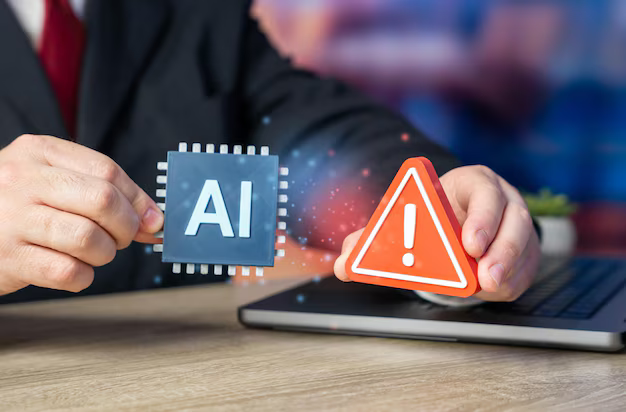
Despite its benefits, AI implementation comes with challenges.
Data Quality
Poor-quality data leads to inaccurate AI results.
Employee Training
Organizations need to train employees to use AI tools effectively.
Security and Privacy
Businesses must protect customer information and comply with data regulations.
Integration
AI should integrate seamlessly with existing systems.
Change Management
Employees may initially resist adopting new technologies, making communication and training essential.
The Future of AI in Business
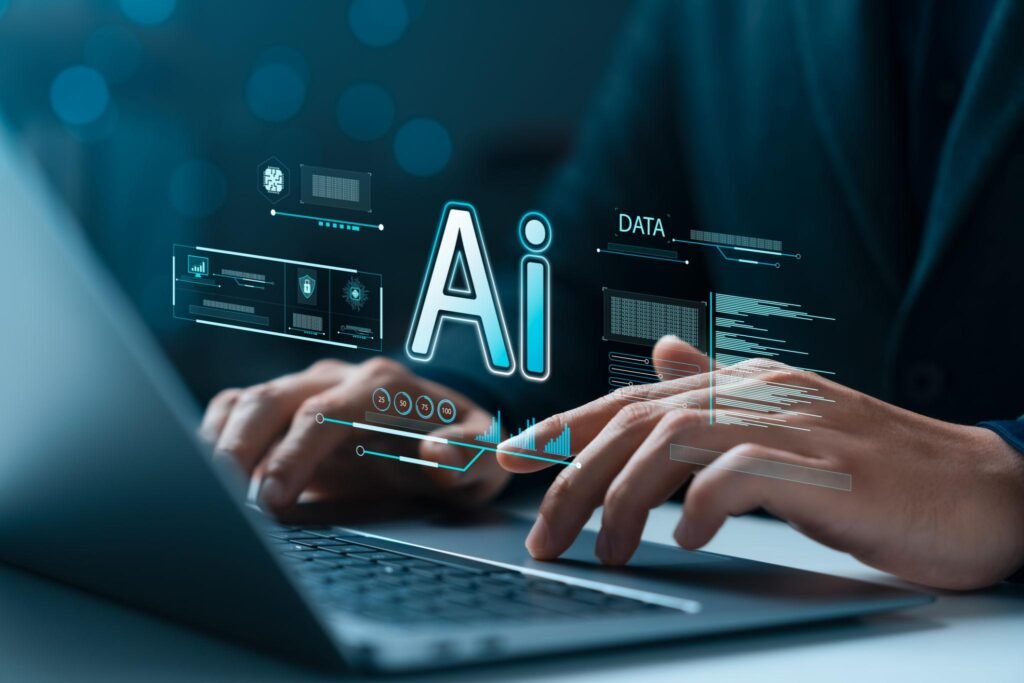
AI will continue to evolve rapidly over the coming years.
Emerging technologies such as generative AI, intelligent automation, predictive analytics, and AI-powered decision support will become increasingly integrated into daily business operations.
Future trends include:
- AI-powered business assistants
- Autonomous customer support
- Hyper-personalized marketing
- Predictive business intelligence
- Smart supply chains
- AI-driven cybersecurity
- Intelligent software development
Businesses that invest in AI today will be better positioned to adapt to future market changes and customer expectations.
How Tokma Technologies Helps Businesses Embrace AI
Digital transformation is not just about adopting new tools; it’s about choosing the right technology partner. Tokma Technologies helps businesses modernize their operations with tailored digital solutions that improve efficiency, scalability, and customer satisfaction.
Our services include:
- Custom software development
- AI-powered business solutions
- Website and mobile app development
- Business process automation
- Cloud-based applications
- Digital transformation consulting
- System integration
- Ongoing technical support
Whether you’re a startup aiming to streamline operations or an established company planning a digital transformation, Tokma Technologies delivers scalable solutions aligned with your business goals.
Conclusion
The transition from traditional operations to digital business is no longer optional; it’s essential for long-term success. AI in business empowers organizations to automate routine tasks, make data-driven decisions, enhance customer experiences, and increase productivity. While adopting AI requires planning, quality data, and employee readiness, the long-term benefits far outweigh the challenges.
Organizations that embrace digital transformation today will be better prepared for tomorrow’s opportunities. By integrating AI strategically, businesses can innovate faster, operate more efficiently, and build lasting competitive advantages.
If your organization is ready to take the next step toward digital transformation, Tokma Technologies can help you design and implement AI-powered solutions that drive measurable business growth.
Frequently Asked Questions (FAQs)
1. What is AI in business?
AI in business refers to the use of artificial intelligence technologies to automate processes, analyze data, improve decision-making, and enhance customer experiences.
2. How does AI support digital transformation?
AI accelerates digital transformation by automating workflows, generating insights from data, improving efficiency, and enabling smarter business operations.
3. Can small businesses benefit from AI?
Yes. Affordable AI tools allow small businesses to automate tasks, improve customer service, optimize marketing, and compete more effectively.
4. What industries benefit most from AI?
Healthcare, finance, retail, manufacturing, logistics, education, hospitality, and professional services all benefit from AI-driven solutions.
5. How can Tokma Technologies help with AI adoption?
Tokma Technologies provides AI-powered software, custom applications, automation solutions, and digital transformation services tailored to each business’s goals.



Post a Comment